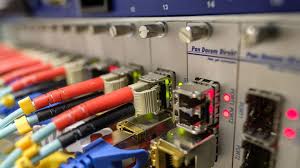
Fiber optic cables have revolutionized the way information is transmitted across networks, providing faster speeds and greater bandwidth than traditional copper cables. These cables use light pulses to transmit data, allowing for more data to be transferred over longer distances with less interference.
Due to their efficiency and reliability, fiber optic cables have become the preferred choice for high-speed internet connections, telecommunications, and data center networks. In this article, we will explore the technology behind fiber optic cables, their benefits compared to other types of cabling, and their applications in various industries.

The Technology Behind Fiber Optic Cables
Fiber optic cables consist of thin strands of glass or plastic fibers that transmit data as pulses of light. These cables are designed to carry large amounts of information at incredibly high speeds. The core of the cable, where the light travels, is surrounded by a cladding layer that reflects light back into the core, preventing signal loss and allowing data to travel long distances without degradation. Fiber optic cables are also immune to electromagnetic interference, making them more reliable than copper cables in noisy environments. By utilizing this advanced technology, fiber optic cables have become essential components in modern communication networks, enabling the seamless transmission of data across the globe.
Applications in Various Industries
The superior performance of fiber optic cables has made them indispensable in various industries. From providing high-speed internet connections to homes and businesses to supporting telecommunications networks for phone calls and video conferencing, fiber optics have transformed the way we communicate. Additionally, data centers rely on fiber optic cables to handle massive amounts of information quickly and efficiently. Industries such as healthcare, finance, and education benefit from the reliability and speed of fiber optic networks for transmitting critical data securely. To learn more about the advantages and disadvantages of fiber optic cables, you can อ่านเพิ่มเติม.
In conclusion, fiber optic cables have revolutionized the way information is transmitted across networks by providing faster speeds, greater bandwidth, and increased reliability. Their advanced technology allows for the seamless transmission of data across vast distances with minimal interference, making them essential components in modern communication networks. As industries continue to rely on high-speed connections and efficient data transmission, fiber optic cables will remain a vital part of our interconnected world, enabling us to communicate and share information faster and more efficiently than ever before.
Leave a Reply